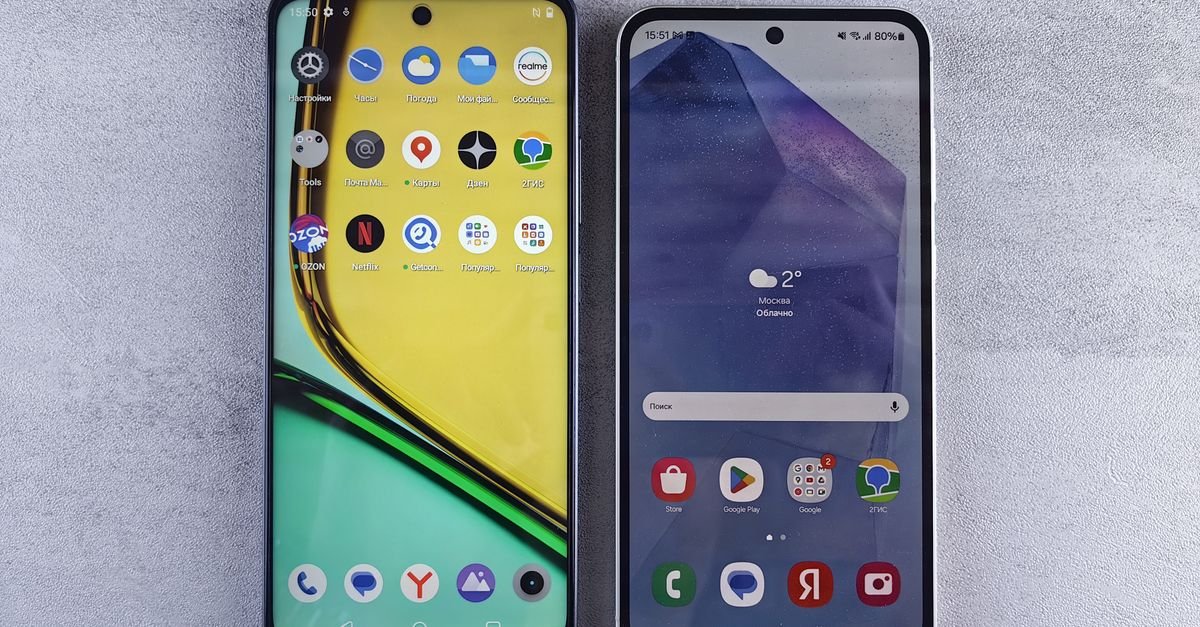
In the vibrant Indian smartphone landscape, the premium mid-range battleground between Rs 30,000 and Rs 40,000 represents the true sweet spot for discerning consumers. While flagship phones command eye-watering six-figure prices, devices in this upper mid-tier deliver 90 percent of the flagship experience at less than one-third of the financial commitment. Entering the 2025 arena, two heavyweights dominate consumer attention: the sleek, elegant OnePlus 13R and the spec-heavy performance brute, the Poco F6 Pro.
Both devices promise flagship-tier processing silicon, vibrant high-refresh-rate AMOLED displays, massive battery capacities, and blistering fast-charging solutions. Yet their engineering philosophies diverge significantly: OnePlus champions software refinement, aesthetic restraint, and battery longevity, while Poco pursues unadulterated benchmark numbers, high-resolution panel fidelity, and raw price-to-performance value. Having evaluated both phones side-by-side through intensive gaming, photographic shootouts, and daily commuting, we break down every nuance in this exhaustive comparison.
Design Language, Materials, and In-Hand Ergonomics
First impressions matter, and the OnePlus 13R immediately stakes its claim as the more sophisticated handset. OnePlus offers an exquisite vegan leather rear panel option alongside a glass variant, paired with smoothly chamfered aluminum side rails that curve gently into the hand. Weighing in at 206 grams with balanced weight distribution, the 13R feels cohesive, sturdy, and undeniably premium. The iconic three-stage alert slider remains present on the left spine, enabling instantaneous switching between Ring, Vibrate, and Silent profiles without turning on the display—a tactile convenience long cherished by the community.
The Poco F6 Pro takes an entirely different visual approach. Embracing an assertive, industrial design language, it sports a flat aluminum frame with sharp, geometric edges and an expansive glass back finished in an eye-catching cosmic pattern. It looks distinctly modern and high-tech, but the glossy glass finish turns into a relentless fingerprint magnet within seconds of barehanded handling. At 209 grams, it feels marginally denser than the OnePlus. In terms of environmental protection, the OnePlus 13R carries an IP65 water and dust resistance rating, while the Poco F6 Pro is rated at IP54, giving OnePlus the edge when caught in sudden monsoon downpours.
Display Showdown: 1.5K ProXDR vs 144Hz WQHD+ AMOLED
Display quality is a paramount consideration for multimedia enthusiasts and mobile gamers, and both contenders present extraordinary visual hardware with distinct strengths:
- OnePlus 13R: 6.78-inch ProXDR 1.5K AMOLED (2780 x 1264 pixels), 1Hz to 120Hz LTPO 4.0 adaptive refresh rate, 4,500 nits peak local brightness, Dolby Vision, HDR10+, Corning Gorilla Glass Victus 2 protection.
- Poco F6 Pro: 6.67-inch Flow AMOLED (3200 x 1440 WQHD+ resolution), 120Hz / 144Hz peak gaming refresh rate, 4,000 nits peak brightness, 3840Hz high-frequency PWM dimming, Dolby Vision, Gorilla Glass 5.
In side-by-side evaluation under harsh outdoor sunlight, the OnePlus 13R edges ahead in perceived visibility thanks to its intelligent ambient tone-mapping and advanced anti-glare polarization. Furthermore, its LTPO 4.0 backplane can dynamically scale down to 1Hz when viewing static images or reading long articles, conserving substantial battery power over a standard work day.
The Poco F6 Pro, however, counters with superior pixel density (526 PPI versus 450 PPI on the OnePlus), resulting in razor-sharp text and intricate detail when streaming 4K HDR YouTube videos. Additionally, Poco incorporates 3,840Hz ultra-high-frequency PWM dimming, significantly reducing eye fatigue and optical flicker headaches for users who read books or browse social feeds late at night in completely pitch-black rooms.
Processor, Gaming Performance, and Thermal Engineering
This is where the debate becomes fiery among tech enthusiasts. OnePlus equips the 13R with the proven Qualcomm Snapdragon 8 Gen 2, whereas Poco equips the F6 Pro with the newer, more muscular Snapdragon 8 Gen 3. Both chips are built on TSMC’s 4nm node, but the Gen 3 features updated Cortex-X4 CPU architectures and an enhanced Adreno 750 GPU.
In synthetic benchmarks, the Poco F6 Pro predictably commands a commanding lead:
- AnTuTu v10 Benchmark: Poco F6 Pro (~2,040,000) vs OnePlus 13R (~1,680,000)
- Geekbench 6 Multi-Core: Poco F6 Pro (6,850) vs OnePlus 13R (5,320)
- 3DMark Wild Life Extreme: Poco F6 Pro (4,750) vs OnePlus 13R (3,780)
However, raw benchmarks do not tell the entire truth of everyday ownership. In typical daily usage—launching Instagram, running multi-tab Chrome sessions, editing Reels, and navigating Google Maps—both handsets feel indistinguishably instantaneous. The performance divergence only emerges during marathon gaming sessions in graphically intensive titles like Battlegrounds Mobile India (BGMI), Call of Duty: Warzone Mobile, and Genshin Impact.
In Genshin Impact at maximum graphical settings, the Poco F6 Pro pushes a blistering average of 59.4 frames per second for the first 25 minutes. However, its aggressive performance profile causes temperatures to climb rapidly toward 44 degrees Celsius, after which thermal throttling introduces occasional frame drops down to 48fps. The OnePlus 13R, utilizing its massive 9,140mm² dual-vapor cooling system and custom Trinity Engine kernel optimizations, maintains a steady 56fps with remarkable thermal stability, never exceeding 41 degrees Celsius. For competitive gamers who prioritize sustained frame pacing over short benchmark bursts, the OnePlus 13R proves surprisingly composed.
Software Experience: OxygenOS 14 vs Xiaomi HyperOS
Hardware specifications are meaningless if the software layer is frustrating, and here the two devices represent polar philosophies in user interface design. The OnePlus 13R runs OxygenOS 14 based on Android 14. While long-time purists occasionally lament the shared ColorOS codebase, OxygenOS 14 remains remarkably clean, fluid, and bloatware-free for the Indian market. Advertisements and unsolicited lock-screen recommendations are non-existent. Gestures feel intuitive, notification management is tidy, and features like Smart Cutout and File Dock add genuine day-to-day productivity value.
The Poco F6 Pro runs Xiaomi HyperOS based on Android 14. HyperOS brings substantial performance optimizations over older MIUI builds, featuring lightweight animations and refined memory allocation. However, Poco continues to load the system with pre-installed partner applications, games, and persistent promotional notifications from the GetApps storefront. While tech-savvy users can uninstall or disable most of these bloatware elements within 20 minutes, the out-of-the-box experience on OnePlus feels significantly more respectful of consumer attention.
Camera Capabilities: Sony IMX890 vs Sony LYT-808
Neither device claims to be a dedicated camera flagship like the Samsung Galaxy S25 Ultra, but their primary optics are more than capable of capturing stunning imagery for social platforms and family archives:
- OnePlus 13R Camera System: 50MP Sony IMX890 main sensor (1/1.56-inch, f/1.8, OIS) + 8MP ultra-wide (f/2.2, 112-degree FOV) + 2MP macro lens. Front camera: 16MP (f/2.4).
- Poco F6 Pro Camera System: 50MP Sony LYT-808 sensor (1/1.55-inch, f/1.6, OIS) + 8MP ultra-wide (f/2.2, 119-degree FOV) + 2MP macro lens. Front camera: 16MP (f/2.4).
In daylight conditions, both primary cameras capture exceptional photographs with vibrant colors, accurate exposures, and sharp details. The newer Sony LYT-808 on the Poco F6 Pro features a wider f/1.6 physical aperture, allowing marginally superior optical depth-of-field and cleaner low-light illumination in dimly lit cafes and night markets. Poco’s night mode algorithms aggressively brighten shadow areas, producing dramatic, high-contrast imagery.
The OnePlus 13R, on the other hand, exhibits superior portrait mode processing. Edge detection around hair, glasses, and shoulders is noticeably more refined, and skin tones are rendered with warmer, more natural Indian complexion accuracy rather than Poco’s tendency to over-smooth facial textures. Both secondary 8MP ultra-wide sensors are merely adequate—soft around the corners and prone to chromatic noise in twilight—while the 2MP macro sensors on both phones remain largely ornamental.
Battery Endurance and Fast-Charging Speeds
Battery anxiety is eliminated on both handsets, though their charging architectures differ in execution:
- OnePlus 13R: Massive 5,500mAh battery paired with 100W SUPERVOOC wired charging. (Includes 100W adapter in the box).
- Poco F6 Pro: 5,000mAh battery paired with 120W HyperCharge wired charging. (Includes 120W adapter in the box).
In our rigorous endurance testing, the OnePlus 13R is the undisputed champion. The combination of a larger 5,500mAh battery cell, an energy-efficient LTPO display, and conservative background power management delivers a staggering 9 hours and 15 minutes of screen-on time, easily powering through two full working days of moderate usage. The Poco F6 Pro, with its smaller 5,000mAh capacity and higher-resolution display, clocks in at a respectable but noticeably lower 7 hours and 10 minutes.
In charging speed, both phones are phenomenally rapid. The Poco F6 Pro blasts from 1 percent to 100 percent in just 22 minutes using its bundled 120W brick. The OnePlus 13R is barely behind, reaching a full charge in 27 minutes. At these speeds, a quick 10-minute morning top-up while brewing coffee provides enough battery life to last the entire evening.
Comprehensive Specifications Comparison
| Specification | OnePlus 13R | Poco F6 Pro |
|---|---|---|
| Display | 6.78″ 1.5K LTPO AMOLED, 1-120Hz, 4500 nits | 6.67″ WQHD+ AMOLED, 120Hz, 4000 nits |
| Processor | Snapdragon 8 Gen 2 (4nm) | Snapdragon 8 Gen 3 (4nm) |
| RAM & Storage | 8GB / 16GB LPDDR5X; 128GB / 256GB UFS 4.0 | 12GB / 16GB LPDDR5X; 256GB / 512GB UFS 4.0 |
| Rear Cameras | 50MP (IMX890, OIS) + 8MP UW + 2MP Macro | 50MP (LYT-808, OIS) + 8MP UW + 2MP Macro |
| Front Camera | 16MP, 1080p 30fps | 16MP, 1080p 60fps |
| Battery Capacity | 5,500mAh | 5,000mAh |
| Wired Charging | 100W SUPERVOOC (27 mins to 100%) | 120W HyperCharge (22 mins to 100%) |
| Water Resistance | IP65 Dust & Water Resistant | IP54 Splash Resistant |
| Software & Updates | OxygenOS 14 (3 OS upgrades, 4 yrs security) | HyperOS (3 OS upgrades, 4 yrs security) |
| Starting Price (India) | Rs 39,999 (Base Variant) | Rs 37,999 (Base Variant) |
Pros and Cons Breakdown
| Device | Key Strengths (Pros) | Key Compromises (Cons) |
|---|---|---|
| OnePlus 13R | • Best-in-class 5,500mAh battery endurance • Clean, ad-free OxygenOS experience • Tactile 3-stage physical alert slider • Superior sustained thermal management • IP65 water resistance rating | • Older Snapdragon 8 Gen 2 processor • Secondary cameras (8MP + 2MP) are mediocre • Base 128GB storage variant uses UFS 3.1 |
| Poco F6 Pro | • Newer, faster Snapdragon 8 Gen 3 silicon • Ultra-crisp WQHD+ 526 PPI display • Blistering 120W fast charging (22 mins) • Generous base 256GB high-speed storage • Slightly lower starting price tag | • Noticeable bloatware and promo notifications • Battery drains faster under heavy workloads • Lower IP54 splash resistance rating • Glossy glass rear is a fingerprint magnet |
Frequently Asked Questions (FAQs)
1. Does the OnePlus 13R support wireless charging?
No. In order to keep pricing competitive and maintain a slim profile while packing a massive 5,500mAh battery, OnePlus reserves wireless charging exclusively for its top-tier flagship, the OnePlus 13. However, with bundled 100W wired charging topping up the battery in under 28 minutes, wireless charging is rarely missed.
2. Which phone is better for long-term gaming (BGMI and COD)?
For short benchmark sprints and maximum peak framerates, the Poco F6 Pro with its Snapdragon 8 Gen 3 leads. However, for marathon gaming sessions exceeding 45 minutes, the OnePlus 13R provides more consistent frame stability with lower thermal throttling and significantly better battery retention.
3. Can the bloatware on Poco F6 Pro be completely removed?
Yes. You can manually uninstall third-party games and apps, and disable personalized ads within HyperOS system settings (MSA app). Once sanitized, the software runs cleanly, though it requires initial setup effort compared to the pristine out-of-the-box state of OxygenOS.
Final Verdict: Which Smartphone Deserves Your Money?
Both the OnePlus 13R and the Poco F6 Pro represent extraordinary achievements in value engineering, but they cater to two fundamentally distinct user profiles:
Choose the Poco F6 Pro if: You are a hardcore hardware enthusiast who wants the absolute fastest processor available under Rs 40,000, you demand razor-sharp WQHD+ resolution for media consumption, you want generous 256GB base storage, and you don’t mind taking a few minutes to clean up software bloatware.
Choose the OnePlus 13R if: You prioritize an exceptional everyday smartphone experience. With its phenomenal 5,500mAh two-day battery life, clean and reliable OxygenOS software, premium in-hand ergonomics with the alert slider, and stable thermal performance, the OnePlus 13R emerges as the more complete, refined, and satisfying daily companion for the vast majority of Indian buyers.
Looking for the best accessories to pair with your new smartphone? Read our in-depth review of the boAt Airdopes 191 ANC earbuds, discover our selection of the best free photo editing apps for Android to elevate your mobile photography, or check our guide on how to keep your Android running at peak speed.
2 thoughts on “OnePlus 13R vs Poco F6 Pro: Mid-Range Battle 2025”