The annual flagship smartphone release cycle often brings incremental polish rather than revolutionary leaps, but when a device demands an opening price of Rs 1,35,999 in India, expectations transcend simple iterative upgrades. The Samsung Galaxy S25 Ultra represents Samsung’s most concentrated effort yet to construct the definitive premium Android superphone. Combining titanium durability, custom-tailored silicon, refined ergonomics, and an upgraded quad-camera array powered by artificial intelligence, the S25 Ultra steps onto the 2025 stage ready to justify its astronomical price tag.
Having spent two rigorous weeks using the Galaxy S25 Ultra as our daily driver across Mumbai, Delhi, and Bangalore—navigating high-contrast outdoor sunlight, heavy multi-tasking productivity, gaming sessions, and late-night street photography—we present this comprehensive, real-world review. Is this titanium titan truly worth your hard-earned Rs 1.35 lakh, or does diminishing return render it an extravagant luxury? Let’s dive deep into every component.
Design, Ergonomics, and Build Quality: Saying Goodbye to Sharp Corners
For several generations, the Galaxy Note legacy haunted the Ultra series in the form of pin-sharp, 90-degree corners. While visually striking, those rigid angles dug painfully into users’ palms during prolonged single-handed usage. With the Galaxy S25 Ultra, Samsung has finally listened to community feedback: the corners are subtly rounded, striking an ideal compromise between the commanding rectangular presence of a productivity powerhouse and the comfortable hand-feel required for everyday usability.
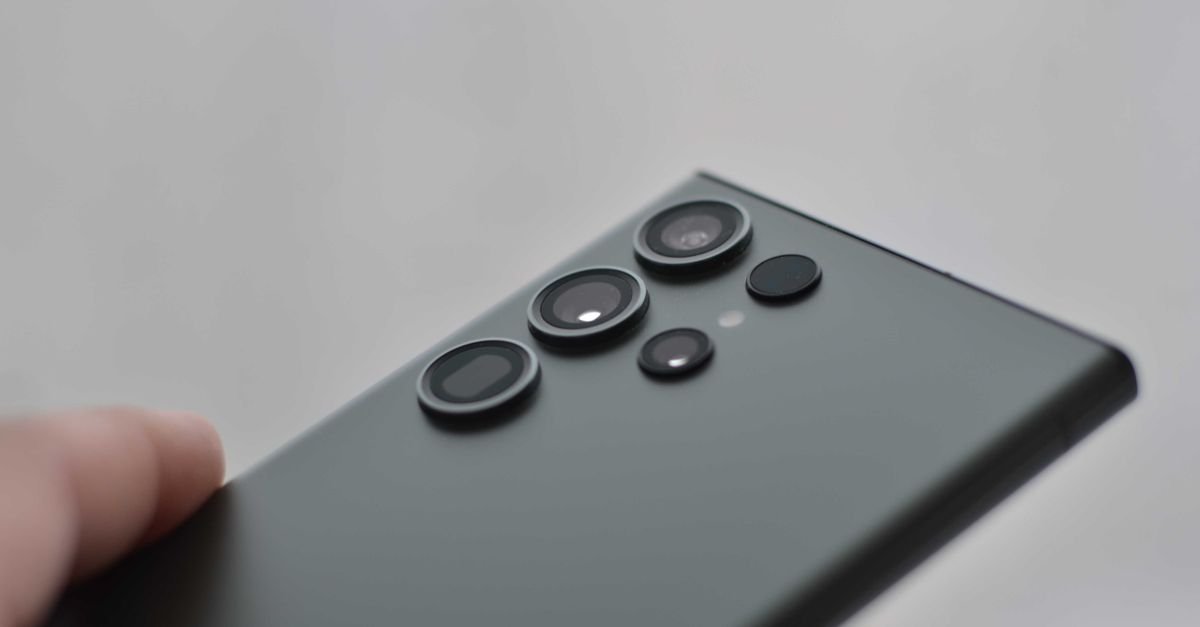
The chassis incorporates Grade 5 Titanium along the outer perimeter, finished with a tactile micro-blasted matte texture that actively repels oily fingerprint smudges. Weighing in at 219 grams, the S25 Ultra is noticeably lighter and more balanced than its predecessor and noticeably sleeker than the hefty Apple iPhone 16 Pro Max. The rear camera rings retain the floating aesthetic that has become Samsung’s visual signature, though the perimeter bezels around each sapphire lens have been reinforced with raised titanium halos to shield the glass when laid flat on marble desks or abrasive granite counter-tops.
The beloved integrated S Pen stylus remains safely docked in the lower-left silo. Clicking the spring-loaded mechanism releases the stylus with a gratifying tactile snap. Despite housing a 5,000mAh battery, a complex periscope camera module, and an internal pen chamber, the device maintains an IP68 dust- and water-resistance rating, capable of surviving freshwater submersions up to 1.5 meters for 30 minutes without flinching.
Display Performance: The Anti-Reflective Gorilla Armor Advantage
Samsung’s dominance in panel technology is legendary, and the Galaxy S25 Ultra showcases their crown jewel: a 6.9-inch Dynamic AMOLED 2X flat display with a razor-sharp Quad HD+ resolution (3120 x 1440 pixels) and an adaptive LTPO refresh rate spanning 1Hz to 120Hz. What sets this screen leagues ahead of any rival, however, is not merely raw resolution, but the second-generation Corning Gorilla Armor anti-reflective glass coating.
In standard outdoor environments, smartphone displays turn into black mirrors under harsh tropical sunlight, forcing users to squint or crank manual brightness to maximum. The anti-reflective treatment on the S25 Ultra cuts ambient surface reflections by over 75 percent. When combined with a peak brightness rating of 2,600 nits and Samsung’s Vision Booster tone-mapping algorithm, reading text messages, reviewing captured photos, or streaming high-dynamic-range HDR10+ content while walking in broad afternoon sunlight in downtown Connaught Place feels effortless.
Color fidelity is extraordinary. In Natural mode, the display covers 100 percent of the DCI-P3 color gamut with surgical delta-E accuracy, ensuring that digital content creators and photographers see true-to-life tones without unnatural oversaturation. For gamers, the 240Hz touch sampling rate translates into instantaneous touch registration, whether aiming down sights in competitive shooters or performing rapid multi-finger gestures.
Performance & Benchmarks: The Snapdragon 8 Elite Custom Silicon
Under the hood, Indian consumers will be relieved to learn that Samsung has skipped its in-house Exynos processors entirely for the Ultra series. Every Galaxy S25 Ultra globally is equipped with the custom Qualcomm Snapdragon 8 Elite for Galaxy, fabricated on TSMC’s cutting-edge 3-nanometer architecture. This chip features custom Oryon CPU cores clocked up to an astonishing 4.47GHz, paired with an Adreno 830 GPU and an upgraded neural processing unit (NPU) engineered specifically for on-device generative artificial intelligence tasks.
In synthetic benchmark testing, the numbers border on desktop-grade territory:
- Geekbench 6 Single-Core: 3,180 points
- Geekbench 6 Multi-Core: 10,240 points
- AnTuTu v10 Total Score: 2,890,500 points
- 3DMark Wild Life Extreme Unlimited: 5,420 points (Average frame rate: 32.5 fps)
Raw numbers tell only half the story; sustained thermal endurance is where modern smartphones live or die. Samsung enlarged the internal vapor cooling chamber by 40 percent compared to last year. During a grueling 60-minute session of Genshin Impact running at maximum graphical settings with 60fps enabled, the device maintained a steady 58.6fps average with minimal thermal throttling, warming comfortably to 41.8 degrees Celsius without creating uncomfortably hot hotspots. Daily apps—including demanding multi-window workflows with split-screen spreadsheets, floating video popups, and high-bitrate video exports in LumaFusion—execute instantaneously without micro-stutters or background task eviction.
Camera Deep Dive: 200 Megapixels of Imaging Mastery
The photographic architecture of the Galaxy S25 Ultra represents a comprehensive optical suite designed to handle every imaginable shooting scenario, from macro insect details to distant lunar craters:
- Primary Wide Sensor: 200MP ISOCELL HP2 (1/1.3-inch sensor size, f/1.7 aperture, Multi-directional PDAF, Optical Image Stabilization)
- Periscope Telephoto: 50MP (5x optical zoom, f/3.4 aperture, Dual Pixel PDAF, OIS, up to 100x Space Zoom)
- Secondary Telephoto: 10MP (3x optical zoom, f/2.4 aperture, Dual Pixel PDAF, OIS)
- Ultra-Wide Sensor: 50MP (120-degree field of view, f/2.0 aperture, Dual Pixel PDAF with automatic macro switching)
- Selfie Camera: 12MP (f/2.2 aperture, Dual Pixel PDAF, 4K60 HDR capture)
Daylight & Primary Sensor Performance
In standard shooting mode, the 200MP sensor employs 16-in-1 pixel binning to output detailed 12.5MP images. The dynamic range is virtually limitless: shadows retain rich textural detail without noisy grain, while blown-out highlights in sky backdrops are expertly suppressed. Samsung’s notorious color over-saturation has been deliberately toned down; skies appear natural azure rather than radioactive neon, and foliage reflects true vegetative greens. For situations where maximum resolving power is paramount, switching to full 200MP mode allows you to crop into architectural facades or crowd scenes and read street signs from blocks away.
Zoom Versatility: 3x, 5x, and 100x Space Zoom
The dual-telephoto arrangement remains the S25 Ultra’s greatest weapon against the competition. The dedicated 3x optical lens delivers flattering portraiture with genuine optical bokeh, preserving facial proportions without wide-angle distortion. Meanwhile, the 50MP 5x periscope lens utilizes high-resolution sensor cropping to deliver pristine, lossless 10x hybrid zoom photos that rival dedicated DSLR zoom telephotos. Up to 30x magnification, images remain remarkably sharp and printable. Beyond 30x up to 100x Space Zoom, Samsung’s AI-assisted ProVisual Engine reconstructs edges and textures, transforming distant monuments or stadium sporting events into usable, shareable memories.
Nightography & Video Capabilities
Low-light performance has seen noticeable refinements thanks to the wider NPU throughput. Night mode exposures no longer turn midnight skies into artificial daytime gray; instead, the camera preserves authentic moody atmosphere while eradicating chromatic sensor noise. Optical image stabilization compensation angles have been expanded, enabling handheld 2-second exposures that remain tack sharp.
Videographers will appreciate full 8K recording at 30 frames per second across both the primary and 5x telephoto lenses, alongside buttery smooth 4K at 120fps for breathtaking cinematic slow-motion sequences. Audio capture via the multi-mic array features intelligent wind-noise cancellation and directional audio zoom that focuses on subjects in frame.
Galaxy AI: Genuinely Practical Tools vs Gimmicks
Artificial intelligence is the prevailing buzzword across the tech industry, but Samsung’s implementation in One UI 7 feels cohesively integrated into day-to-day productivity. Features like Circle to Search with Google have evolved beyond basic image lookup; you can now circle mathematical formulas to receive step-by-step solutions, or circle foreign language phrases to instantly translate full contextual paragraphs.
For Indian business professionals and frequent travelers, Live Call Translate now provides bidirectional audio and on-screen text translations in Hindi, English, and 14 other languages in real time during phone conversations. In Samsung Notes, Note Assist automatically transcribes voice recordings from college lectures or boardroom meetings, formats them into bulleted outlines, and corrects grammatical inconsistencies. The generative photo editor allows you to seamlessly lasso unwanted photobombers, reposition subjects, and intelligently fill background textures with convincing realism. If you are curious how independent artificial intelligence tools compare to on-device systems, read our comprehensive analysis on Google Gemini Ultra 2.0 going free.
Software & Longevity: One UI 7 and 7 Years of Updates
Shipping with Android 15 and Samsung’s updated One UI 7, the user interface feels noticeably more responsive. Animation curves have been rewritten from scratch, ensuring that gestures, app launches, and notification shade pulls execute with silky physics that rival iOS. The integration of DeX mode continues to turn the S25 Ultra into a capable desktop computer simply by connecting it to an external monitor via USB-C or wireless Miracast.
Crucially, Samsung guarantees 7 full generations of Android OS upgrades and 7 years of security patches. Buying this phone in 2025 means software support extending through 2032—a commitment to longevity that ensures high resale value and environmental sustainability.
Battery Life and Charging Speeds: The Enduring Pain Point
The Galaxy S25 Ultra retains a 5,000mAh lithium-ion battery cell. Thanks to the power efficiency of the 3nm Snapdragon 8 Elite and the dynamic LTPO display, battery endurance is stellar. In our standard loop battery test—consisting of 3 hours of video playback, 2 hours of social browsing, 1 hour of camera capture, and 1 hour of light gaming on 5G—the device consistently delivered 8 hours and 45 minutes of screen-on time, easily sailing through a full 1.5 days of typical usage.
Where Samsung undeniably stumbles, however, is charging velocity. While Chinese competitors from OnePlus, Xiaomi, and iQOO regularly offer 100W to 120W charging bricks in the box that top up a phone in under 25 minutes, Samsung limits the S25 Ultra to 45W wired charging (and provides no charger in the retail packaging). A full charge from 0 to 100 percent requires approximately 68 minutes using an authentic USB Power Delivery PPS adapter. Wireless charging tops out at 15W, alongside 4.5W reverse wireless charging for topping up Galaxy Buds or smartwatches on the go.
Specifications Comparison Table
| Feature | Samsung Galaxy S25 Ultra | Apple iPhone 16 Pro Max | Vivo X100 Ultra |
|---|---|---|---|
| Display | 6.9″ QHD+ AMOLED 2X, 120Hz Anti-Reflective | 6.9″ Super Retina XDR OLED, 120Hz | 6.78″ 2K E7 AMOLED, 120Hz |
| Processor | Snapdragon 8 Elite for Galaxy (3nm) | Apple A18 Pro (3nm) | Snapdragon 8 Gen 3 (4nm) |
| RAM & Storage | 12GB / 16GB RAM; 256GB / 512GB / 1TB | 8GB RAM; 256GB / 512GB / 1TB | 12GB / 16GB RAM; 256GB / 512GB / 1TB |
| Main Camera | 200MP + 50MP (5x) + 10MP (3x) + 50MP (UW) | 48MP + 12MP (5x) + 48MP (UW) | 50MP (1″) + 200MP (3.7x) + 50MP (UW) |
| Battery & Charge | 5000mAh; 45W Wired, 15W Wireless | 4685mAh; 27W Wired, 15W MagSafe | 5500mAh; 80W Wired, 30W Wireless |
| Stylus Support | Yes, Embedded S Pen | No | No |
| Starting Price | Rs 1,35,999 (India) | Rs 1,44,900 (India) | Approx. Rs 90,000 (Import) |
Pros and Cons: The Honest Balance Sheet
| What We Loved (Pros) | Where It Falls Short (Cons) |
|---|---|
| Unmatched 6.9-inch anti-reflective Gorilla Armor display | Charging speed remains sluggish at 45W maximum |
| Refined rounded corners drastically improve comfort | No charger or protective case included in the retail box |
| Blistering Snapdragon 8 Elite benchmark and gaming speeds | Price tag of Rs 1.35 Lakh+ is prohibitive for mainstream users |
| Versatile quad-camera array with class-leading zoom optics | Galaxy AI cloud features may require subscription after 2026 |
| Integrated S Pen functionality remains without equal | Noticeable camera lens bump requires a protective case |
| Industry-leading 7 years of full OS and security updates | Slightly thick profile compared to slim lifestyle flagships |
Frequently Asked Questions (FAQs)
1. Does the Galaxy S25 Ultra come with a charger in the box in India?
No. In accordance with Samsung’s environmental initiatives, the retail box includes only the smartphone, a USB Type-C to Type-C cable, a SIM ejector tool, and quick start documentation. You must purchase an official Samsung 45W Power Delivery PPS adapter separately for approximately Rs 2,999 to unlock maximum charging speeds.
2. Is the S25 Ultra display completely flat this year?
Yes. Samsung has completely eliminated curved edge glass. The panel is 100 percent flat, making it exceptionally easy to apply tempered glass screen protectors and preventing accidental palm touches along the display borders while taking photos or drawing with the S Pen.
3. Will Galaxy AI features remain free forever?
Samsung’s official terms state that on-device and basic Galaxy AI capabilities will remain free of charge through at least the end of 2025. Cloud-based advanced computational features could potentially transition into a tiered subscription model in future years, similar to Google One AI Premium.
Final Verdict: Should You Buy the Samsung Galaxy S25 Ultra?
The Samsung Galaxy S25 Ultra is a triumphant testament to mature engineering. It doesn’t radically reinvent the smartphone wheel because it doesn’t need to; instead, it polishes every rough edge of its predecessor into mirror-like perfection. The ergonomic adjustment to rounded corners transforms daily comfort, the anti-reflective display makes outdoor screen glare an archaic memory, and the custom Snapdragon 8 Elite silicon delivers staggering computing horsepower with rock-solid thermal stability.
If you currently own a Galaxy S24 Ultra, the incremental upgrades may not justify an immediate upgrade. However, if you are moving from an S22 Ultra, an older Galaxy Note, or migrating across from an iPhone in search of ultimate photographic flexibility, the S25 Ultra stands unchallenged at the summit of the Android ecosystem.
If your budget cannot stretch to flagship territory, don’t worry—the mid-range space has experienced a massive performance surge. Read our detailed OnePlus 13R vs Poco F6 Pro comparison to find flagship-level processing at a quarter of the price, or optimize your current device with our practical guide on how to speed up any slow Android phone.
2 thoughts on “Samsung Galaxy S25 Ultra Review: Is It Worth Rs 1.35 Lakh?”